What to bring
Any previous assessment reports, medical or school records, a list of your main concerns, and details of any current medication. If your child has a comfort object, bring that too.
Assessment booking
You do not need a referral or a diagnosis. Fill in a few details and the centre will call you to confirm a time. If development is on track you get informed reassurance — and if it isn't, you have not lost time.
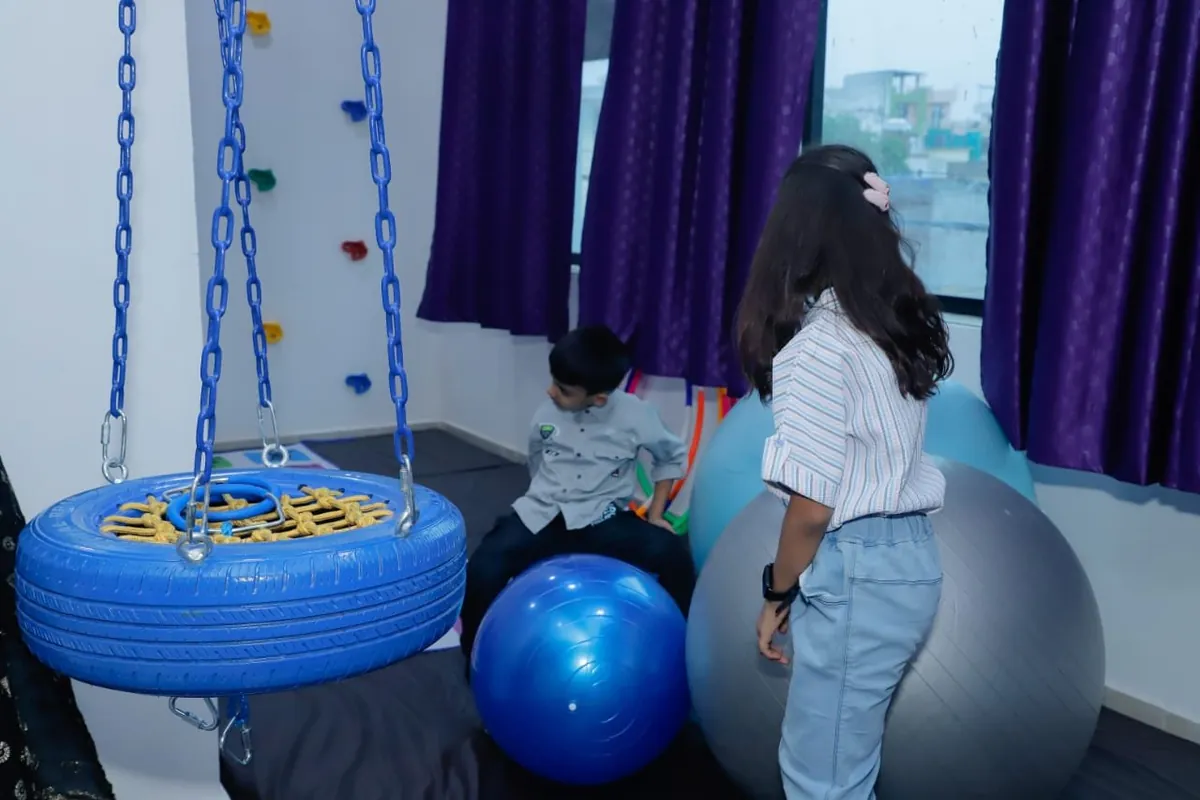
Before you come
Any previous assessment reports, medical or school records, a list of your main concerns, and details of any current medication. If your child has a comfort object, bring that too.
Assessment appointments run longer than therapy sessions, because they involve history-taking and structured evaluation as well as direct observation of your child.
Some things are easier to explain out loud. Call +91 94253 38984 during opening hours and describe what you're seeing — you'll be told which assessment makes sense as a starting point.
After the assessment
The assessment is the first of six defined stages. Nothing is committed to until findings have been explained to you.
A detailed developmental history and structured, age-appropriate assessment. The therapist establishes exactly where your child is across the relevant domains — and explains it to you in plain language.
Findings are turned into specific, functional goals — agreed with you, and prioritised by what would make the biggest practical difference to your child's day rather than by what is easiest to measure.
Regular one-to-one sessions in a purpose-equipped space. Activities are graded to sit just beyond what your child can currently do — challenging enough to build skill, achievable enough to sustain confidence.
Progress is checked against the agreed goals on a regular cycle. Where something is not moving, the approach changes — reviews exist to make decisions, not to confirm that work is continuing.
You are shown the strategies your therapist uses and how to apply them at home. This is not an optional extra — how consistently strategies are used between sessions is one of the strongest predictors of progress.
Written summaries of what has been worked on, what has changed and what comes next — usable with schools, paediatricians and other professionals involved in your child's care.